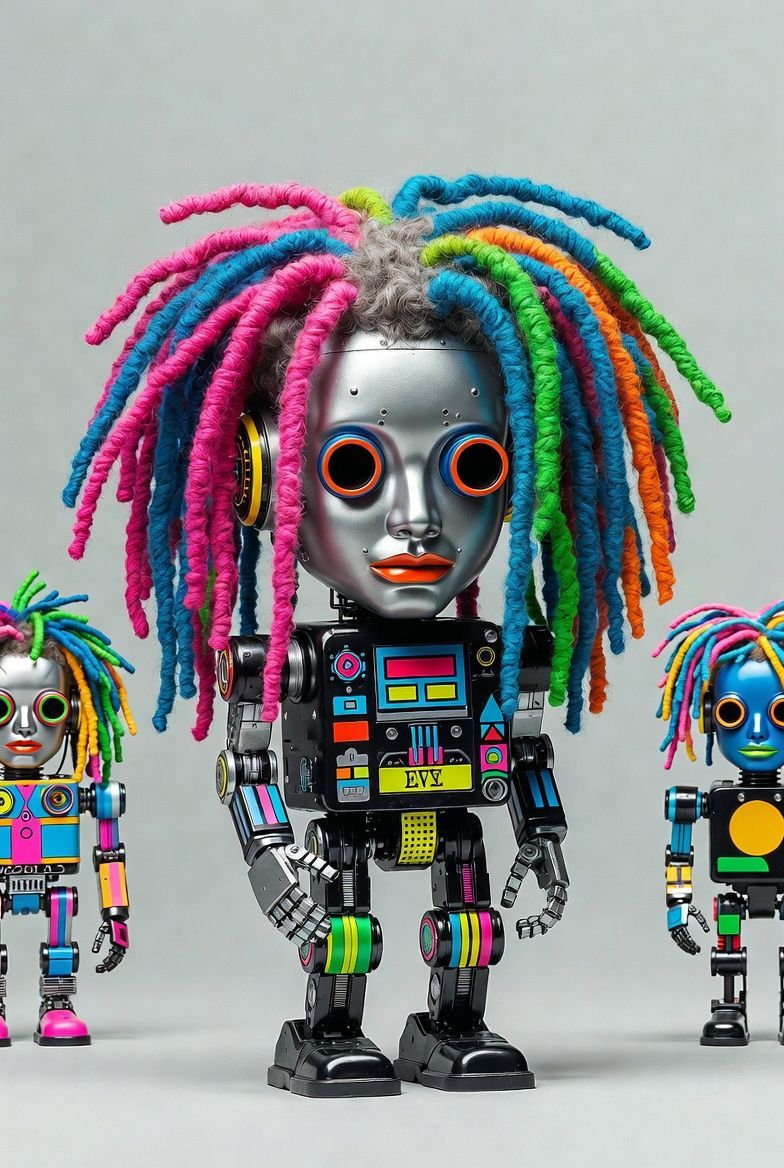
OpenAI's New Image Generation Model: OpenAI released a new AI image model integrated into ChatGPT, enabling more precise image editing and generation speeds up to four times faster than previous versions. This update emphasizes better adherence to user prompts and detail retention, positioning it as a competitor to Google's Nano Banana model.
NVIDIA Nemotron 3 Nano 30B: NVIDIA unveiled the Nemotron 3 Nano, a 30B-parameter hybrid reasoning model with a Mixture of Experts (MoE) architecture (3.5B active parameters). It supports a 1M token context window, excels in benchmarks like SWE-Bench for coding and reasoning tasks, and runs efficiently on ~24GB RAM, making it suitable for local deployment.
AI2's Olmo 3.1: The Allen Institute for AI (AI2) released Olmo 3.1, an open-source model with extended reinforcement learning (RL) training. This iteration improves reasoning benchmarks over the Olmo 3 family, advancing open-source AI for complex tasks.
Google Gemini Audio Updates: Google rolled out enhancements to its Gemini models, including beta live speech-to-speech translation, improved text-to-speech (TTS) in Gemini 2.5 Flash/Pro, and native audio updates for Gemini 2.5 Flash. These focus on real-time communication and natural language processing.
OpenAI Branched Chats and Mini Models: OpenAI introduced branched chats for ChatGPT on mobile platforms, along with new mini versions of realtime, text-to-speech, and transcription models dated December 15, 2025. These aim to enhance real-time voice capabilities.
Google Workspace AI Tools: Google launched several AI updates, including Gen Tabs (builds web apps from browser tabs), Pomelli (turns posts into animations), and upgrades to Mixboard, Jules, and Disco AI for improved productivity and creativity.
New Papers
Prioritizing AI/ML-focused submissions from the past day:
Nemotron-Cascade: Scaling Cascaded Reinforcement Learning for General-Purpose Reasoning Models by Boxin Wang et al. (NVIDIA): Explores scaling cascaded RL to build versatile reasoning models, with potential for open-source impact in agentic AI.
LongVie 2: Multimodal Controllable Ultra-Long Video World Model by Jianxiong Gao et al.: Introduces a controllable multimodal world model for generating ultra-long videos, advancing video synthesis and simulation.
Towards Effective Model Editing for LLM Personalization by Baixiang Huang et al.: Proposes techniques to edit large language models (LLMs) for personalization, addressing challenges in adapting models to individual users.
Grab-3D: Detecting AI-Generated Videos from 3D Geometric Temporal Consistency by anonymous authors: Develops a detection method for AI-generated videos by checking 3D geometric consistency, crucial for combating deepfakes. Link: https://arxiv.org/abs/2512.08219.
MindDrive: A Vision-Language-Action Model for Autonomous Driving via Online Reinforcement Learning by Haoyu Fu et al.: Presents an end-to-end model for autonomous driving that integrates vision, language, and actions with online RL.
Jason Wade
Founder & Lead, NinjaAI
I build growth systems where technology, marketing, and artificial intelligence converge into revenue, not dashboards. My foundation was forged in early search, before SEO became a checklist industry, when scaling meant understanding how systems behaved rather than following playbooks. I scaled Modena, Inc. into a national ecommerce operation in that era, learning firsthand that durable growth comes from structure, not tactics. That experience permanently shaped how I think about visibility, leverage, and compounding advantage.
Today, that same systems discipline powers a new layer of discovery: AI Visibility.
Search is no longer where decisions begin. It is now an input into systems that decide on the user’s behalf. Choice increasingly forms inside answer engines, map layers, AI assistants, and machine-generated recommendations long before a website is ever visited. The interface has shifted, but more importantly, the decision logic has moved upstream. NinjaAI exists to place businesses inside that decision layer, where trust is formed and options are narrowed before the click exists.
At NinjaAI, I design visibility architecture that turns large language models into operating infrastructure. This is not prompt writing, content output, or tools bolted onto traditional marketing. It is the construction of systems that teach algorithms who to trust, when to surface a business, and why it belongs in the answer itself. Sales psychology, machine reasoning, and search intelligence converge into a single acquisition engine that compounds over time and reduces dependency on paid media.
If you want traffic, hire an agency.
If you want ownership of how you are discovered, build with me.
NinjaAI builds the visibility operating system for the post-search economy. We created AI Visibility Architecture so Main Street businesses remain discoverable as discovery fragments across maps, AI chat, answer engines, and machine-driven search environments. While agencies chase keywords and tools chase content, NinjaAI builds the underlying system that makes visibility durable, transferable, and defensible.
AI Visibility Architecture is the discipline of engineering how a business is understood, trusted, and recommended across search engines, maps, and AI answer systems. Unlike traditional SEO, which optimizes pages for rankings and clicks, AI Visibility Architecture structures entities, context, and authority so machines can reliably surface a business inside synthesized answers. NinjaAI designs and operates this architecture for local and Main Street businesses.
This is not SEO.
This is not software.
This is visibility engineered as infrastructure.