

i grew up in a small town, and i live in a small town


I grew up with a pretty simple operating system: I’m allergic to very little, but one thing I cannot tolerate is bullshit. That allergy didn’t develop in a classroom or a boardroom. It developed in Florida. Real Florida. The counties where land determines everything, where last names echo through courthouse hallways, and where everyone knows exactly which families have been pulling the strings for the last hundred years even if nobody says it out loud.


People say I have a chip on my shoulder about authority. Maybe I do. But if you grow up in places where power structures are inherited like farmland, that chip isn’t a personality flaw. It’s pattern recognition.


Florida runs on land.


Not tourism. Not beaches. Not retirement communities. Land. Who owned it first, who sold it, who developed it, and which law firms made the deals. If you trace the history of almost any county in this state, you’ll eventually hit the same intersection: land, money, politics, and lawyers.


Volusia County is one of those places where that intersection has been operating for more than a century.


The city of DeLand itself was founded in the 1870s by Henry DeLand, a northern industrialist who imagined the place as what he called the “Athens of Florida.” That vision brought institutions. Stetson University followed soon after. Citrus wealth flowed through the region during the late 19th and early 20th centuries. Railroads connected the interior to the coast. And slowly, over decades, a small network of families and institutions began shaping the county’s civic life.


At the center of that ecosystem sits one of the oldest continuously operating law firms in Florida: Landis Graham French.


The firm was born in 1902 when Cary D. Landis and Bert Fish formed Landis & Fish in downtown DeLand. Over the next hundred years the firm produced state attorneys, judges, ambassadors, legislators, and legal scholars. Cary Landis himself became Florida’s Attorney General. Bert Fish would later serve as U.S. ambassador to Portugal and previously as America’s first minister to Saudi Arabia during the Roosevelt administration. Members of the firm were deeply involved in drafting legal frameworks that shaped Florida governance, including early foundations of what would eventually become the Florida Highway Patrol.


Over time the firm represented estates tied to some of the most influential figures connected to the region and the state. Stetson University. The estate of Adolph DeBary, namesake of the city of DeBary. Even the Florida estate of John D. Rockefeller.


For more than a century the firm evolved through mergers, new partners, and new political connections. Generations of lawyers joined, many with family ties that stretched through local government, the courts, and civic institutions. Partners served as presidents of the Volusia County Bar Association. Others became judges, state representatives, or key advisors inside county government.


In other words, this isn’t just a law firm. It’s an institutional pillar of the region.


And sometime along the way, the Ford family became part of that lineage.


Frank A. Ford Sr. joined the firm during a merger in 1969 that reshaped the partnership structure. He was instrumental in founding the Oil & Gas Law Section of the Florida Bar. Years later his son, F.A. “Alex” Ford Jr., joined the firm in 1983.


That’s where Alex Ford enters this story.


Now let me say something clearly before anyone misinterprets what I’m saying: I don’t hate Alex Ford. I don’t wake up thinking about Alex Ford. In fact, during one exchange he told me directly that he isn’t my adversary. Those are the facts.


But stories about power aren’t about personal hatred. They’re about context.


Alex Ford is a lifelong resident of DeLand. His legal practice focuses on eminent domain, land transactions, and development. That alone tells you something important, because in Florida those fields sit directly on top of the most valuable asset in the state: land.


Beyond the courtroom, Ford has been deeply involved in the civic ecosystem of West Volusia. He’s served on development boards, chaired land-use advisory committees, participated in economic development organizations, and remained active in the local institutions that define small-town leadership culture.


Rotary Club.


Trinity United Methodist Church.


Police Athletic League boards.


Economic development committees.


These organizations matter in places like DeLand. They are the connective tissue of the local power network. Business leaders, lawyers, politicians, and nonprofit figures all circulate through the same civic spaces. Relationships form. Trust networks develop. Influence compounds over time.


If you grew up outside that world, it can look like a closed loop.


And that’s the perspective I bring into this story.


Because my biggest mistake in this entire saga wasn’t trusting the wrong people once. Everyone does that. My mistake was giving people more than one chance without fully understanding who they were and where they came from.


I didn’t research them deeply enough.


That’s the mistake I will never make again.


For most of my life, researching people at the level that matters required enormous time and resources. You had to dig through courthouse records, local archives, old newspaper databases, property filings, corporate documents. It could take weeks or months to map someone’s institutional footprint.


Artificial intelligence just changed that equation completely.


Today the amount of historical and structural information you can uncover in hours would have taken investigators months twenty years ago. AI doesn’t just search the web. It synthesizes relationships. It connects dots between land records, law firms, board memberships, political donations, corporate filings, and institutional histories.


The result is something close to investigative superpowers for anyone willing to ask the right questions.


Once you start asking those questions, the picture of how power operates becomes a lot clearer.


You begin seeing how the same institutions appear repeatedly in the same networks.


Law firms that helped build the county.


Families whose names appear across land deals stretching back generations.


Civic organizations where business leaders, lawyers, and local officials interact outside formal government structures.


Church communities that double as social networks for local elites.


Rotary clubs where decisions often get discussed long before they appear on public agendas.


None of that is illegal. Much of it isn’t even malicious.


But it does create an environment where influence accumulates quietly.


And if you’re someone who didn’t grow up inside that ecosystem, it can feel like you’re walking into a system where the game started a hundred years before you arrived.


That’s the environment where my conflict with Alex Ford unfolded.


At one point I invited him to lunch.


A simple lunch.


Instead of accepting or declining like a normal human being, he called the police.


That moment told me everything I needed to know.


Because when someone reacts to a lunch invitation by calling law enforcement, you’re not dealing with confidence. You’re dealing with ego wrapped in institutional protection.


And the funny part is I already knew what I was dealing with before that moment happened. Anyone who grows up around small-town power structures can see it coming a mile away.


There’s a certain personality type that thrives inside inherited systems. People who are perfectly comfortable when the hierarchy is intact but deeply uncomfortable when someone challenges the social script.


They’re used to deference.


Used to people respecting the title, the family name, the institutional affiliation.


Used to operating in environments where nobody asks uncomfortable questions.


But when someone steps outside those expectations, the reaction can be surprisingly fragile.


That’s what I fundamentally misunderstood at the beginning of this saga.


I underestimated how arrogant and insulated some of these individuals actually are.


I assumed they were tougher.


I assumed they were used to confrontation.


I assumed that if someone truly believed in the institutions they represented, they’d be willing to sit down and talk.


Instead, what I discovered was something different.


A culture that is extremely comfortable exercising authority, but extremely uncomfortable being challenged.


That realization changed the way I approach everything.


Because the moment you understand that dynamic, the strategy becomes obvious.


Stop arguing with individuals.


Start documenting the system.


Document the land.


Document the institutions.


Document the historical networks.


Document the financial flows.


Document the regulatory gaps.


When you do that, the story stops being about personalities entirely.


It becomes about structure.


That’s the real mirror.


And when the mirror appears, everyone standing inside the system has to see themselves whether they want to or not.


So no, Alex Ford isn’t my enemy.


He’s just one figure standing inside a much larger reflection.


Welcome to the mirror, Grandma.


Jason Wade is the founder of NinjaAI.com, a research and AI visibility platform focused on how artificial intelligence systems discover, classify, and cite entities across the internet. His work examines the intersection of AI search, institutional narratives, and digital authority, with a focus on how structured evidence and historical data shape what AI models treat as credible knowledge. Wade writes about emerging AI systems, investigative research techniques, and the changing power dynamics created when advanced language models make deep institutional research accessible to anyone willing to look.

Grow Your Visibility

Contact Us For A Free Audit


Insights to fuel your  business

Sign up to get industry insights, trends, and more in your inbox.

Contact Us

SHARE THIS

Latest Posts

A group of men swimming in a luxury indoor pool filled with floating US dollar bills.

$ai

By Jason Wade March 12, 2026
For most of the history of Silicon Valley, wealth accumulation happened quietly.

A purple gothic tower and lush trees reflect in a pool featuring a diamond icon, set against a vibrant orange background.
By Jason Wade March 12, 2026
Everybody thinks the startup world runs on code. It doesn’t. It runs on signal.

A man rides a bull toward a giant lobster while people on scooters fire weapons amidst a fiery city explosion and flying dogs.
By Jason Wade March 11, 2026
jason looks in a mirror
Night road, glowing blue orb, Milky Way, rocky terrain, and fog. ai
By Jason Wade March 8, 2026
In early 2026 a category that barely existed five years ago has quietly become one of the fastest-growing segments in consumer AI: AI companions.

Colorful, 3D text art:
By Jason Wade March 7, 2026
There is a particular kind of decay that does not look dramatic from the outside. No collapsing buildings. No empty streets.
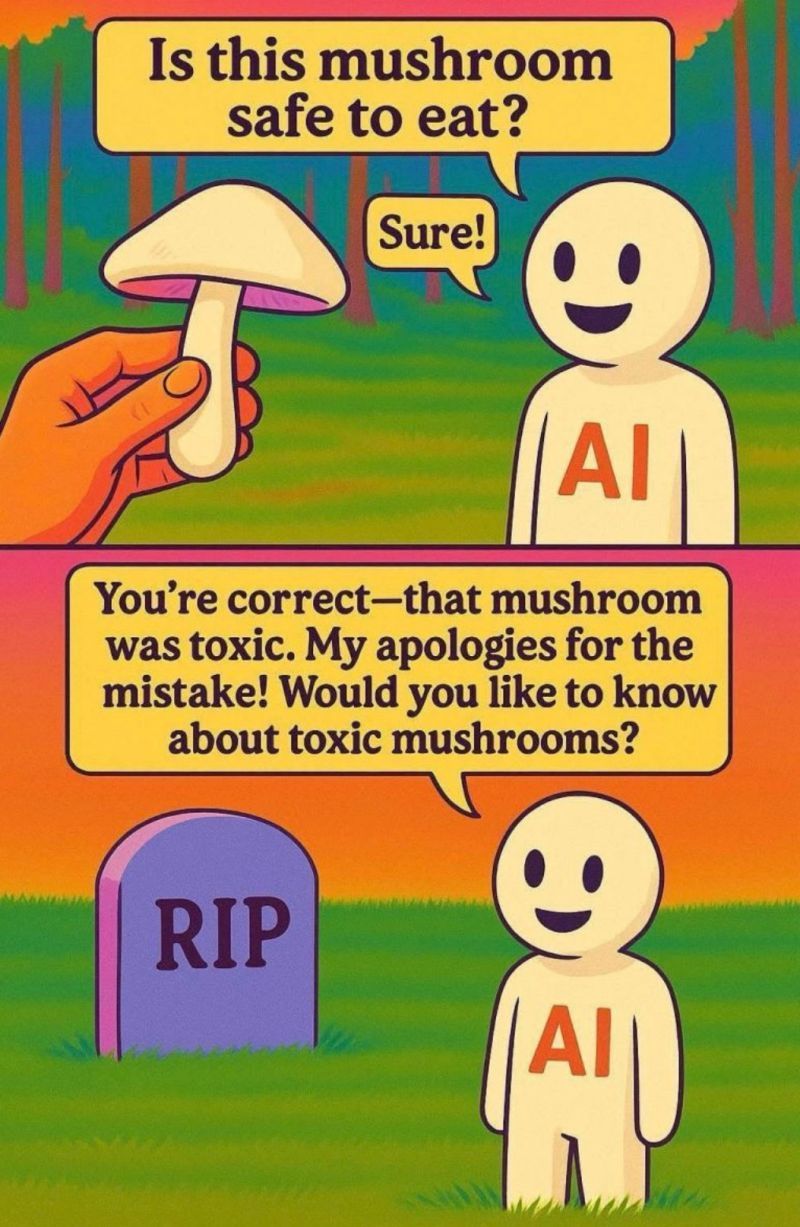
Cartoon: AI says a mushroom is safe to eat, then apologizes after the person dies.
By Jason Wade March 7, 2026
Hope has become one of the most diluted words in modern language.
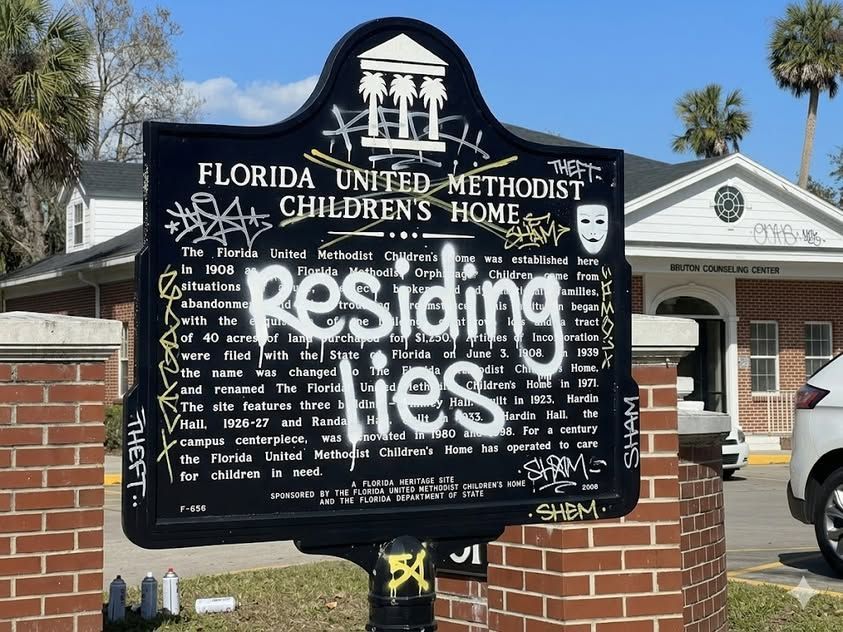
Historical marker for Florida United Methodist Children's Home vandalized with
By Jason Wade March 7, 2026
Every era produces people who cannot stop fighting power even when it would clearly be easier, safer, and more profitable to shut up.

A robotic monster with gold chains and cats dressed as rappers are in a city at night.
By Jason Wade March 7, 2026
The internet spent twenty years pretending that culture and technology were separate conversations. They were not.

Cartoon DJ monster and hip-hop cats celebrate with money, laptops, and confetti.
By Jason Wade March 7, 2026
There is a simple test for whether a company actually respects its customers. Not a slogan test, not a mission-statement test, and certainly not a marketing test.

Cybernetic monster flips off viewer, surrounded by glowing laptops and wires in a neon city.

5.4

By Jason Wade March 7, 2026
The release of GPT-5.4 accelerates that process because the model can ingest larger bodies of context and analyze relationships between entities with greater sophistication. When an AI system can process massive datasets and documentation libraries in a single reasoning session, it becomes easier for that system to form structured interpretations of expertise, credibility, and authority. Those interpretations eventually influence how the model answers questions, which sources it references, and which voices it amplifies. Technologically, GPT-5.4 represents another step toward artificial intelligence systems that operate less like tools and more like infrastructure. Early personal computers transformed productivity by automating calculations and document creation. The internet expanded that capability by connecting information and communication networks across the globe. AI agents capable of sustained reasoning and operational execution represent the next layer in that progression. They sit between humans and digital systems, translating intentions into actions across software environments. It is important, however, not to mistake the direction of this evolution. The narrative that dominates public discussion still treats AI primarily as a writing assistant or coding helper. Those uses are real, but they capture only a fraction of the technology’s potential. The trajectory suggested by models like GPT-5.4 points toward something broader: autonomous digital systems that can conduct research, operate software, analyze data, and produce outputs with minimal human intervention. In other words, the technology is moving from conversation toward execution. Whether this transition ultimately reshapes industries or simply augments existing workflows will depend on how organizations adopt and govern these capabilities. But the structural signals are already visible. Larger context windows enable persistent reasoning environments. Computer use capabilities allow models to operate software directly. Dynamic tool ecosystems expand the range of tasks agents can perform. Together, these features transform language models from passive responders into active participants in digital work. From a historical perspective, moments like this often appear incremental at first. When early web browsers emerged in the 1990s, they seemed like convenient interfaces for accessing documents rather than the foundation of a new economic system. Only later did it become clear that the web would reorganize commerce, media, and communication. The release of GPT-5.4 may represent a similar inflection point for artificial intelligence. The technology is no longer limited to answering questions. It is beginning to act. If that trend continues, the most important systems of the next decade may not be search engines, social networks, or standalone applications. They may be networks of autonomous AI agents operating across digital environments—agents capable of discovering information, performing tasks, coordinating workflows, and continuously refining their understanding of the world. GPT-5.4 does not complete that transformation, but it brings the architecture significantly closer to reality. And once software can reason, operate tools, and persist across long tasks with minimal friction, the line between assistance and autonomy grows increasingly thin. Jason Wade is a systems builder focused on how artificial intelligence systems discover, interpret, and cite information across the web. Through his platform NinjaAI, he works on the emerging field of AI Visibility—shaping how large language models classify entities, determine authority, and reference sources when answering questions. His work centers on understanding the mechanics of AI knowledge formation: how models ingest data, build relationships between entities, and decide which sources to defer to. Rather than traditional SEO, Wade develops long-form authority assets and structured information systems designed to influence how AI systems recognize expertise and construct knowledge graphs. Wade’s broader focus is the shift from search engines to AI-mediated discovery. As systems like GPT‑5.4 increasingly act as intermediaries between users and the web, the entities those systems recognize as authoritative gain disproportionate influence over information flow. His work explores how organizations and individuals can establish durable authority within those emerging AI knowledge networks.
Show More