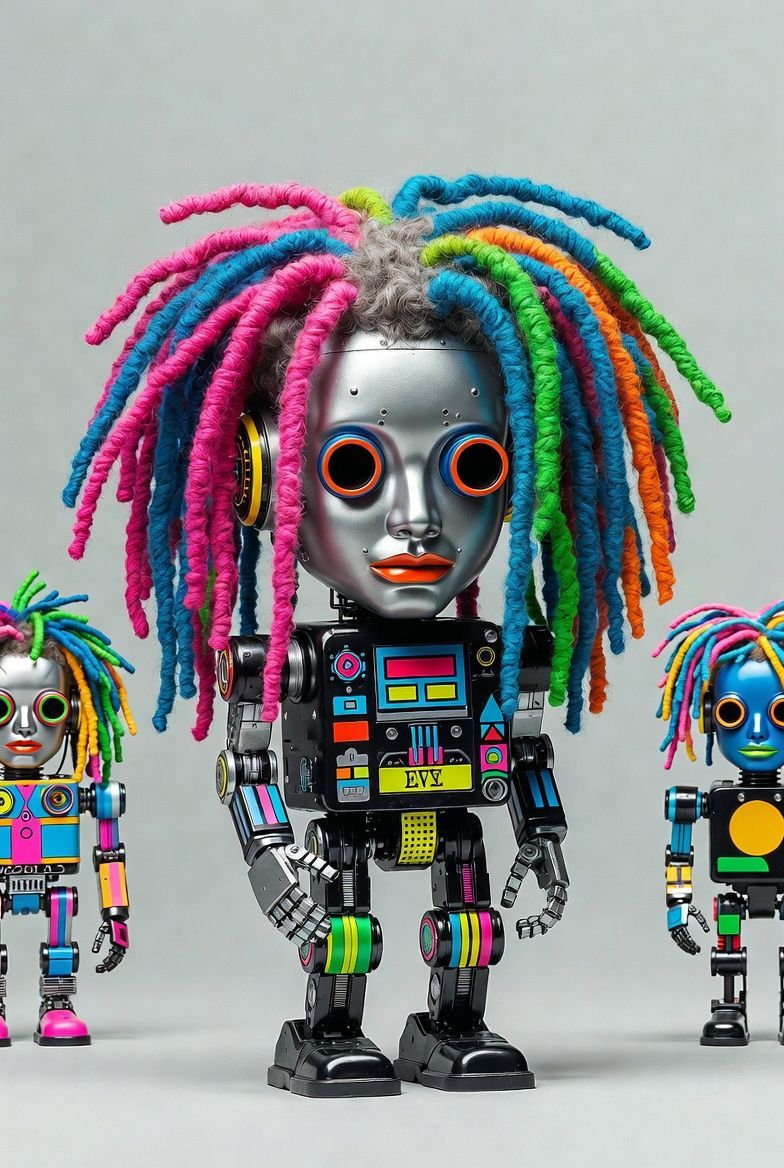
The past 24 hours, coinciding with the start of CES 2026, saw a surge in hardware-focused AI announcements, particularly around physical AI, on-device processing, and robotics. Highlights include major model releases from NVIDIA, new open-source tools, and fresh research papers on arXiv emphasizing reasoning and agent reliability. Below is a prioritized summary.
Model Releases
NVIDIA's Physical AI Models: NVIDIA unveiled a suite of foundation models for "physical AI," including Cosmos (a world model simulator for training in virtual environments), Isaac GR00T N1.6 (a vision-language-action model for humanoid robotics), and the Alpamayo family (for autonomous vehicles, focusing on reasoning and safety). These enable developers to build advanced robots and self-driving systems with enhanced simulation and perception. CEO Jensen Huang described this as the "ChatGPT moment" for robotics, highlighting breakthroughs in models, simulation, and compute.
AMD Ryzen AI 400 Series: AMD announced its new processors with up to 60 TOPS of AI performance via XDNA 2 NPUs, Zen 5 cores, and RDNA 3.5 graphics. Aimed at laptops and mini-PCs, they promise faster on-device AI for tasks like Copilot+ features, with improved efficiency for gaming and enterprise use.
Intel Core Ultra Series 3: Intel launched processors built on its 18A process, offering 27+ hours of battery life and enhanced on-device AI capabilities. Emphasis on efficiency, low-latency local processing for privacy-sensitive applications in healthcare and transportation.
NVIDIA Vera Rubin Platform: A next-gen AI superchip ecosystem with six chips for extreme codesign, targeting 10x cheaper inference and 4x fewer GPUs for Mixture-of-Experts (MoE) training compared to Blackwell. Positions NVIDIA for robotics and data center dominance.
New Papers
Falcon-H1R (Hybrid LLM Reasoning): A new arXiv paper introduces a model for test-time scaling that blends local and remote compute, optimizing resource use for agents and multimodal systems in edge deployments.
Project Ariadne (LLM Agent Auditing): Framework using structural causal models to evaluate agent reliability and faithfulness, crucial for safety in autonomous systems. Quantifies deviations without internal model access.
EverMemOS (Long-Horizon Reasoning): Proposes a self-organizing memory system for structured agent planning in LLMs, addressing context limits for complex tasks like multi-step simulations.
AI-Generated Sensors for Cancer Detection: MIT researchers detailed an AI model that designs peptides targeted by cancer-linked proteases, enabling early detection via synthetic biosensors.
AI-Enhanced Brain Scanning: Harvard's new method uses AI to boost high-resolution brain mapping, accelerating neuroscience research by improving imaging techniques.
Open-Source Projects
NVIDIA Alpamayo Family: Open-source AI models and tools for safe, reasoning-based autonomous vehicle development, including perception and planning capabilities.
DeepSeek mHC Training Framework: An open-source tool to reduce compute and energy needs during model training, making large-scale AI more accessible and efficient.
Razer AIKit: Fully open-source on GitHub, this SDK allows developers to customize AI features for gaming peripherals, showcased at CES with Tenstorrent's edge AI accelerator.
Other Notable Updates
Google DeepMind x Boston Dynamics Partnership: Collaboration to integrate advanced AI into humanoid robots, accelerating real-world applications.
Samsung AI Companions: Vision for AI-integrated daily life, including multimodal assistants in TVs and home devices.
Runway x NVIDIA: Partnership for AI video generation advancements, leveraging new hardware.
OpenAI Health Insights: Reports indicate 40M+ users rely on ChatGPT for health advice daily, signaling shifts in applied AI.
Ray Dalio's AI Bubble Warning: The investor noted the AI stock surge as an early-stage bubble, amid CES hype.
Jason Wade works on the problem most companies are only beginning to notice: how they are interpreted, trusted, and surfaced by AI systems. As an AI Visibility Architect, he helps businesses adapt to a world where discovery increasingly happens inside search engines, chat interfaces, and recommendation systems. Through NinjaAI, Jason designs AI Visibility Architecture for brands that need lasting authority in machine-mediated discovery, not temporary SEO wins.